Your boat’s engine is its most valuable mechanical component, yet many owners unknowingly ignore the first warning signs of a developing problem. Strange noises, excessive smoke, unusual vibrations, overheating, or fluid leaks rarely appear without a reason. Identifying these symptoms early can help prevent expensive repairs, unexpected breakdowns at sea, and even dangerous situations while navigating.
In this guide, the marine mechanics at Mediteranien Mecanic Shop explain the ten most common warning signs that indicate your marine engine requires immediate professional attention. Whether you own an inboard diesel engine, an outboard petrol engine, or a commercial vessel operating along the Costa Brava, recognizing these symptoms could save thousands of euros in future repairs.
QUICK ANSWER
If your marine engine overheats, produces unusual smoke, vibrates excessively, becomes difficult to start, loses power, leaks fluids, or emits abnormal noises, you should stop using the vessel and schedule a professional inspection as soon as possible. Continuing to operate a damaged engine often transforms a minor repair into a major mechanical failure.
Table of Contents
- Why Early Diagnosis Matters
- Sign #1 – Engine Overheating
- Sign #2 – Excessive Exhaust Smoke
- Sign #3 – Unusual Engine Noises
- Sign #4 – Excessive Vibrations
- Sign #5 – Oil Leaks
- Sign #6 – Fuel Consumption Increases
- Sign #7 – Difficulty Starting
- Sign #8 – Loss of Engine Power
- Sign #9 – Warning Lights or Alarms
- Sign #10 – Corrosion Around the Engine
- Maintenance Checklist
- Frequently Asked Questions
- Conclusion
🔧 EXPERT INSIGHT
Technical review by Abdelouahid Missiria.
“In our workshop, we rarely encounter engines that fail without warning. Most severe failures begin with small symptoms that owners ignore for weeks or months. Acting immediately after noticing unusual behavior almost always reduces repair costs and prevents secondary damage.”
— Abdelouahid Missiria
Why Early Diagnosis Can Save Thousands of Euros
Marine engines operate in one of the harshest mechanical environments. Saltwater, humidity, high engine loads, vibration, corrosion, and long periods of inactivity all accelerate wear. Unlike automotive engines, marine propulsion systems often work continuously under heavy load, making preventive maintenance even more important.
Many serious failures begin with relatively inexpensive components. A damaged impeller, clogged fuel filter, worn bearing, or leaking hose can quickly affect the cooling system, lubrication circuit, or transmission if ignored.
| Minor Issue | If Ignored |
|---|---|
| Damaged impeller | Engine overheating |
| Oil leak | Bearing failure |
| Fuel contamination | Injector damage |
| Loose propeller | Transmission damage |
| Cooling blockage | Cracked cylinder head |
Sign #1 – Your Engine Is Overheating
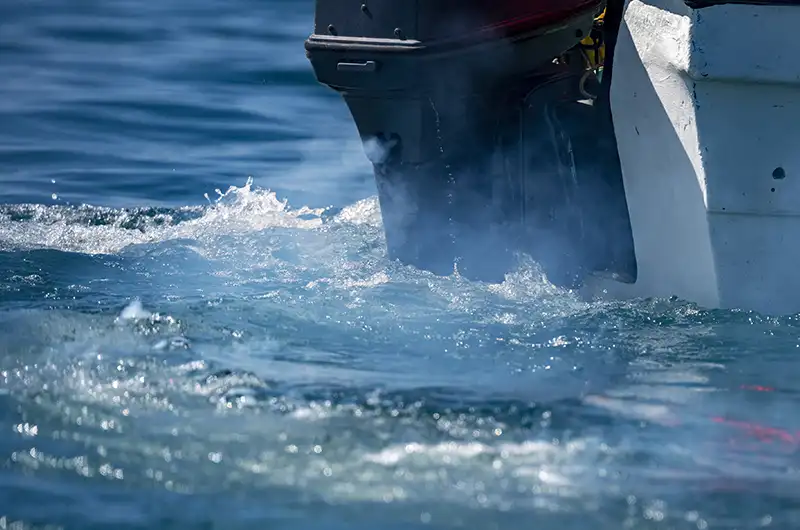
Overheating is one of the most dangerous conditions affecting a marine engine. Modern engines often include alarms or temperature sensors, but many smaller vessels rely on the operator to notice unusual temperatures or steam.
Common Causes
- Blocked seawater intake
- Broken impeller
- Low coolant level
- Heat exchanger blockage
- Thermostat failure
- Cooling pump damage
Symptoms
- Temperature alarm
- Steam around engine compartment
- Reduced engine performance
- Burning smell
- Automatic power reduction
Workshop Tip
Never continue operating an overheating marine engine. Stop safely, inspect the cooling system, and contact a qualified marine mechanic before restarting.
Sign #2 – Excessive Exhaust Smoke
The color of exhaust smoke often provides valuable information about your engine’s internal condition.
| Smoke Color | Possible Cause |
|---|---|
| White | Cooling system or water entering combustion |
| Blue | Burning engine oil |
| Black | Rich fuel mixture or restricted airflow |
| Grey | Fuel injector or combustion issues |
While brief smoke during startup may be normal for some diesel engines, continuous smoke under normal operating conditions requires immediate diagnosis.